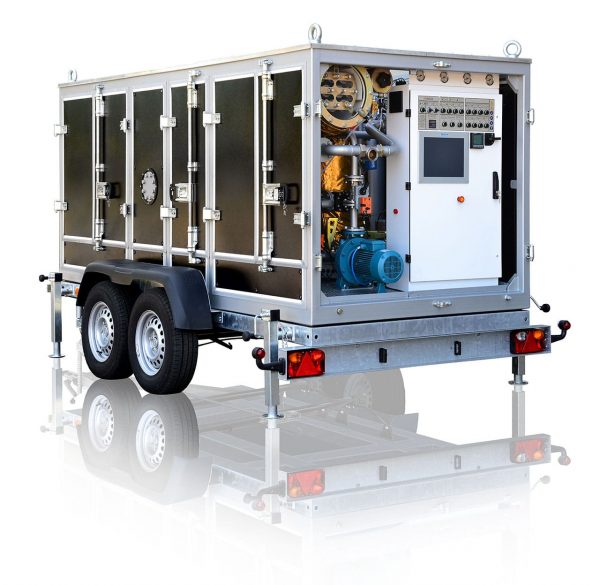
Tag Archives: oil reclamation

Oil Reclamation as a Method of Improving Power SubStations


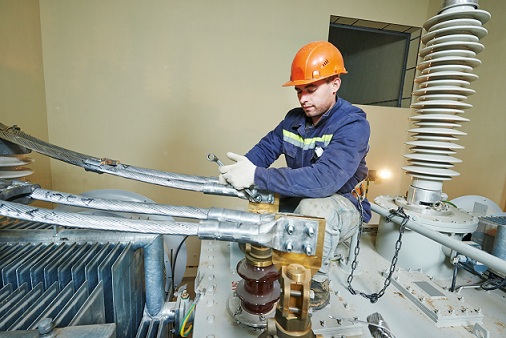
Uninterrupted transformer oil regeneration

Industry is always looking for new ways in how to improve the efficiency of existing electric power transformers since the price for new equipment has been increasing significantly in the past twenty years.  Distribution substations and the transmission network are constantly working at peak or near peak capacity and that leads to much more rapid transformer wear and aging.  Especially hard hit is the transformer’s liquid and solid insulation.

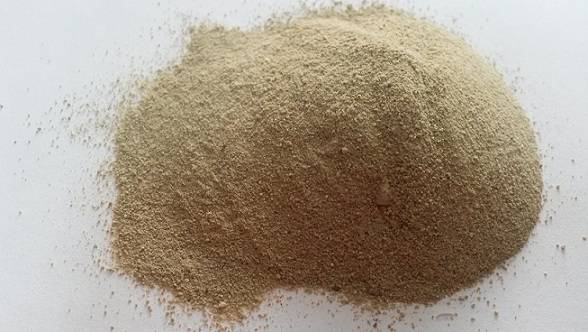
If the insulating system is in bad condition, the dielectric properties of insulating oil will be reduced.  For such a prolem, GlobeCore has developed technology for the regeneration and purification of contaminated oil that restores the oil to its original new like condition.  Using this advance new technology, oil is circulated through the special regeneration columns filled with Fuller’s Earth sorbent materials.  Contaminated oil flows to the oil station and is sent back to the transformer in a clean, new like condition.

Since oil is continuously circulated through the unit, the contaminated oil residues are washed out from the transformer.  Fuller’s Earth (a naturally-occurring sorbent) absorbs impurities and contaminants.   The regeneration time will depend on the amount of oil that needs to be regenerated and the degree of its contamination.

GlоbeCоre equipment is desiged to work on energized transformers so there will be no, or minimal service interuptions.  Another benefit of GlobeCore equipment is that its mobility allows the operators to serve multiple pieces of equipment in remote locations without having to evacuate the transformer to a repair or maintenance facility.

GlobeCore regeneration technology allows transformer services companies to:

(1) restore oil to its original like new condition;

(2) extend the service life of transformers and improve their efficiency;

(3) carry out “preventive maintenance” in order to eliminate the need for corrective mainatenance;

(4) greatly reduce the need to by new oil;

(5) eliminate the need to dispose of used oil; and

(6) eliminate the risk of service trouble during power equipment operation;

GlobeCore technology provides for transformer service life extension, reduction in financial expenditures and improvement of equipment efficiency.  Contaminated oil residues significanly reduce the service life of windings and operational reliability of transformers.  Aging of oil-cellulose insulation may lead to irreversible consequences during  its expected service life.

GlobeCore technology increases transformer service life thereby reducing operating costs and improving operational reliability.

Contaminated oil residues reduce significantly the service life of windings and the transformer’s operational reliability.  Despite the fact that oil-cellulose insulation may be used for more than 25 years, contaminated oil will cause premature failure of the transformer long before the transformer is ready for retirement.

Factors that have a negative impact on the insulation system of the transformer
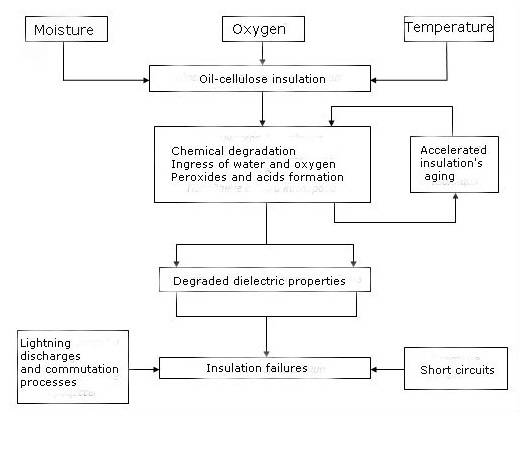
Factors

GlobeCore’s Equipment is Environmentally-Friendly

Oil Regeneration is better than an oil change

It is better to regenerate oil than to simply change it.  Products of degradation that have accumulated in the transformer’s solid insulation will get into the new oil within a few months of the oil change.  As a result, the new oil will lose its performance characteristics much more rapidly than with the GlobeCore rengernation process.

GlobeCore equipment is considered to be revolutionary since Fuller’s Earth (the active adsorbent filtering system) is able to absorb products of degradation.  Additionally, oil that is regenerated with GlobeCore equipment is much more resistant to aging.  When only changing the oil, there is always up to 15% of the contaminated oil left in the transformer that will accelerate the new oil’s aging.

Due to advanced GlobeCore technology, all contaminated oil residues are washed out of the transformer by the hot oil being circulated through a closed loop that includes the regeneration equipment and the transformer.

GlobeCore’s regeneration technology is eco-friendly does not generate hazardous waste while regenerating transformer oil and other industrial fluids and oils.  The Fuller’s Earth, used in the GlobeCore CMM-R line of equipment, absorbs all impurities and is reactivated directly in the equipment precluding the need to stop and dispose of used sorbent during the processing job.  Each load of Fuller’s Earth will last up to 300 regeneration cycles before needing to be replaced.
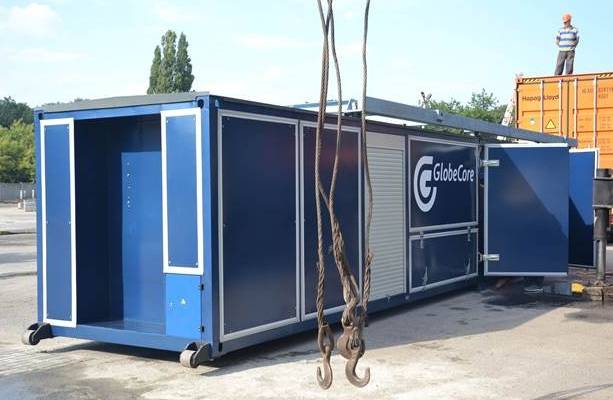
CMM-12R(2)

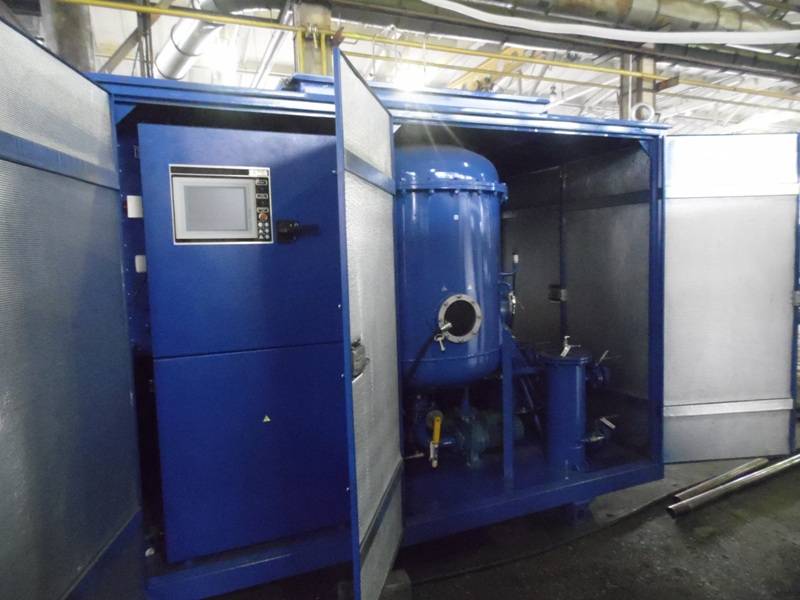
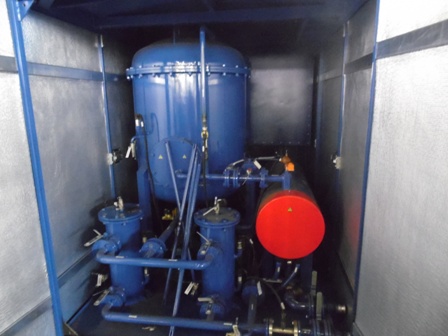
GlobeCore CMM-R line of equipment

GlobeCore technology distinguishes itself through the following features:

  •    Continuous autmoated and remote internet operation;
  •    Operating Cost reductions;
  •    Long-lasting oil and fluid purification effect;and
  •    Complete removal of contamnants from oil and solid insulation.

Removing Contaminants from Transformers

If your comapny does not perform reglarly scheduled preventive maintenance, unwanted sediments and other contaminants will accumulate in the crital areas of your transformers.  As a result, the performance characteristics of dielectric insulating oil will be reduced and the likelyhood of a transformer insulation failure will be greatly increased.

The GlobeCore Process of regeneraing dielectric insulating oil is able to dissolve and remove sediments at high temperatures from the transformer’s core and solid insulation. Even previously accumulated sediments may be dissolved and removed from the entire transformer.

The following table shows the limiting values of transformer oil that indicate when it is necessary to regenerate the transformer’s dielectric oil.

Performance Characteristic

Value

Acid number

>0.08 mgKOH/g of oil

Dielectric losses at 90⁰C (40 and 60 Hz)

>0.2 for power transformers and reactors with voltage more than 170 kW.

>0.50 for power transformers and reactors with voltage less than 170 kW.

Inhibitor content

Inhibitor additve concentration <.4%

Acidity and  surface tension correlation

Acidity > 0.6 mgKOH/g of oil and surface tension <30 mN/m

Sediments

perceptible sediments

Additionally, IEC Standard 60422 recommends to regenerate oil if the performance characteristics of the oil are reduced.

Benefits of Preventive Maintenance

The degradation effects suffered by the solid insultaion found in the modern oil filled electric power transformer are irreversible.  Solid insulation degradation cannot be repaired through any modern regeneration technologies on the world market today.  Regeneration therefore, should be considered as a preventive mantenance procedure as opposed to a corrective maintenance procedure.  The GlobeCoreService Life Extension Program” uses advanced modern technolgy to remove moisture and contaminants that degrade the transformer’s solid insulation.  It provides for the service life extension of the transformer by removing the progressive aging contaminant from the solid insulation.
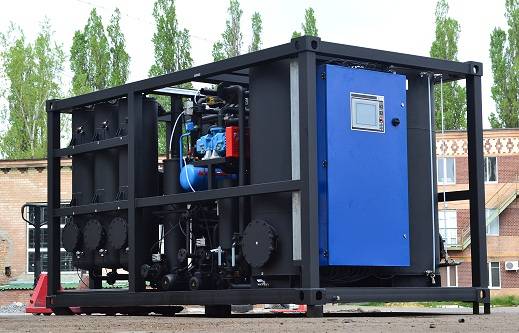
CMM-P

GlobeCore CMM-R oil processing units

The table below shows the results of the physicochemical analysis of transformer oil that has been regenerated using the GlobeCore CMM-R oil processing units.

The Results of Physicochemical Analysis of Transformer Oil  

Characteristic

Before regeneration

After regeneration

IEC 60296 standard

1

Physical form

Cloudy, dark brown

Pure, clear

Pure, without sediments

2

Acid number,  mg KOH/g oil

0.63

0.01

0.01

3

Corrosive sulphur

+

none

none

4

Moisture content, ррm, no more than

170

5

30-40

5

Breakdown voltage, kW

11

73

30-70

6

Dielectric dissipation factor at 90ºС, %

4.0

0.001

0.005

7Gas content, %

12

0.1

8

Surface tension at 25ºС, mN/m

22

45

40

9

Mechanical impurities in microns

50

0.2

10

Oxidation resistance test:– acid number mg of KOH/g oil

0.2

1.2

After regeneration, oil that has been used for many years is restored to its original new like condition and its dielectric properties are kept stable during many years of future service.

GlobeCore regeneration units substantially extend the service life of electric power transformers.
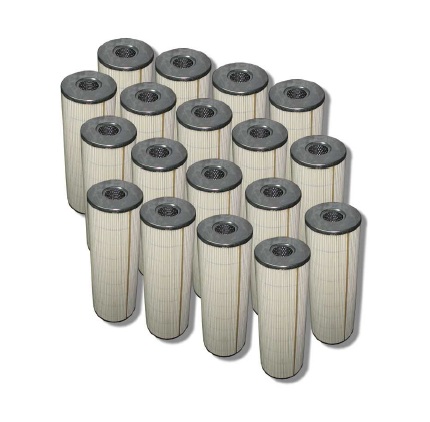
What Does “Oil Filtration” Mean?

At first glance, the question “What is oil filtration” seems to be easy to answer.  There are however, no hard and fast answers to this question  because of the great amount of variety of oil found on the world oil market.  If for a moment you were to put aside the broad variety of oils on the market, we can answer the question in the following way:

Oil filtration is a method of removing contaminants either in a suspended state either to protect the equipment, or to extend the service life of the oil.  

Let’s discuss it in more detail.

What does filtration mean?

There are two types of oil filtration:

  • Primary purification; and
  • Secondary purification;

Primary purification is used to protect equipment.  The filtering devices are mounted by the equipment producers. From a technical point of view, this type of filtration is realized with a by-pass valve that lets the oil flow past and through the valve.  This device removes impurities of more than 25 microns.

This kind of filtration is called “coarse” filtration due to the size of contaminants being filtered.  The primarily task of this kind of filtration is to prevent equipment damage by coarse particles.  The filtering devices are mounted in the lubrication circuit of the equipment or in the delivery line that leads to the lubrication point.  Sometimes they are be mounted in the return pipeline that goes from the lubrication point depending on the equipment manufacturer’s design and engineering concept.

Filters are usually made of porous materials.  The internal bypass valve opens when filters become saturated with contaminants and/or when pressure exceeds preset limits.   Non-filtered oil then flows out of the filter and is circulated into the equipment.

A secondary filtration is applied in order to extend the service life of oil through by purifying and restoring the oil’s performance characteristcs.  Often, a secondary filtration method is called “oil purification.”  The main benefit of this kind of filtration is that it extends the service life of the oil as well as the equipment.  Sometimes, producers provide equipment with a built-in secondary filtration system, but often secondary filtration is considered to be an optional pice of equipment.

The following are the most widespread methods of secondary filtration:

  • Centrifuge filtration;
  • Magnetic and vacuum cleanings;
  • Dehydration; and
  • Application of filtering materials.

Secondary filtration is able to clean oil to the lowest ISO purity class standard.  Even if seconday filtration systems are in place, it is not recommended to change or remove the the primary filtration system mounted by the equipment manufacturer.

GlobeCore has a wide spectrum of filtering systems designed and intended for the purification of lubricating oils and fluids.  These systems provide for the service life extension of oil as well as the oil-filled equipment.

Taking into consideration the high prices for oil filled equipment and the cost of oil changes as well as possible downtimes, it is reasonable to mount GlobeCore’s secondary filtration units on your existing equipment.

Transformer Oil Reclamation by Fuller’s Earth

GlоbeCоre has offered a fundamentally new solution to the problem of dielectric transformer oil regeneration.  Much importance is placed on transformer oil since it serves as a liquid insulator and serves to transfer execess heat away from the vital parts of electric power transformers used in the electric transmission industry.  Such factors as atmospheric oxygen, moisture, and high temperatures can have a negative impact on the condition of dielectric oil which inevitably leads to transformer failures. To eliminate the risk of transformer failures, transformer oil should be thoroughly purified and regenerated periodicaly throughout the life cycle of the oil and the transformer.

GlobeCore has developed technology that allows for the regeneration of used transformer oil.  GlоbeCоre adheres to the “preventive maintenance” principle:  it is better to prevent a problem than to have to correct a problem.  The main concern of our company is to extend the effective service life of the transformer.

The mobile oil purification station, designated as CMM-R line of equipment, distinguishes itself through the following features:

(1) Fuller’s Earth serves as a sorbent that has good adsorbent properties and GlobeCore’s automatic sorbent reactivation system eliminates hazardous waste generation and reduces labor costs;

(2) oil is circulated through a closed path: contaminated oil is supplied to the regeneration unit and the regenerated oil is delivered back to the transformer.  There is still 10-15% of used oil left in the transformer when simply changing the used oil for new oil.  Contaminated oil will the get to the fresh oil thereby reducing its performance characteristics.  Due to the GlоbeCоre technology, oil is circulated through a closed path which enables the used oil residues to be washed away making the process much more efficient and less costly than changing the oil.

(3) there is an inhibition block in the CMM-R oil treatment units that increases the oil’s stability to oxidation.  It injects DBPC 2.6, an antioxidant additive.

The GlоbeCоre equipment that is designed for transformer oil reclaiming by Fuller’s Earth allows the user to:

  • reduce manual labor costs since all the processes are automated and only one operator will be required to operate the CMM-R oil regeneration unit.
  • regenerates oil on energized transformers;
  • prevents oil from contact with atmospheric air since it may spoil its insulation properties;
  • performs it tasks regardless of the weather or season;
  • reduces harmful discharges into the air since oil and sorbent are not subject to disposal; and
  • reduces financial expenditures for new oil purchase.

Taking everything into consideration, we may state that the service life of transformers will be extended when using the GlobeCore Process of oil regeneration.

GlоbeCоre knows how to save your company money and will be glad to reveal this secret to the representatives of your staff and company.

Reclamation of Turbine Oil

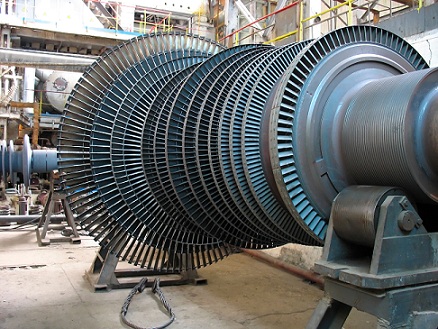
This article will highlight the advantages and disadvantages of turbine oil regeneration/reclamation.  According to the statistics, the electrical needs of North America have been significantly increased over the past several years.  As a result, the companies who were in the business of serving the energy needs of Americans had to buy a great amount of new turbines or to recondition existing ones already in service. All theses changes in the power industry has aroused heated discussions regarding the condition of turbine oils.  Many energy providers turned out to lack knowledge about the very lubricating oils that cool and lubricate some of their most important pices of equipment. It is therefore, the purpose of this article is to provide power suppliers with a better understanding of turbine oil regeneration/reclamation.  First however, it is important to consider the specfic terms of the article.

Regeneration and Reclamation, terms that are synonymous, consists in removing water and other impurities from the oil product and restoring it to  “like new” condition and making it suitable for continued use.

Another term often used along with “regeneration/reclamation” is refortification and consists in adding a specified amount of additive to pure and dry oil products to renew the additives that have been exhausted through use and regeneration.

There are generall two kinds of oil recycling in the electrica generation and turbine industry: one is when used lubricant is transferrred and applied in other industries that require oil product with lower performance characteristics and the other is when used lubricating oils need are treated to restire the oil product to make it available for further application and use.

Production of Turbine Oil

In general, there is no difficulty with turbine oil preparation.  It is essential however, to keep a proper proportion between base oils and additives since soluble contaminants can deteriorate a product’s performance characteristics or even destroy oil composition.

Many energy providers consider that turbine oil will successfully perform its functions until its service life comes to an end, but that is not always the case. Very often, companies use turbine oil that barely meets the equipment requirements in order to reduce their operational costs. Additionally, such oil then is exposed to thermal and oxidative treatments that rapidly degrade its performance characteristics. Due to harsh and demanding operating conditions, oil will lose it ability over time to perform its intended function and should be changed or reclaimed every three years or when indicated by an oil analysis test.  In order to regenerate/reclaim the oil, the proper equipment will need to be employed.

GlobeCore is an industry leader in producing high-quality equipment for oil regeneration/reclamation in the CMM-10 line if units.  The GlobeCore CMM-10 line is designed to purify and regenerate many types of fluids and oils such as as transformer oil, turbine oil, industrial oil, and dark diesel fuel.  Turbine oil reclamation using GlobeCore equipment will reduce your expenditures on new turbine oil and greatly reduce your need to perform corrective maintenance. Additionally, after reclamation, the oil is much more stable and less susecptible to oxidation (does not darken or accumulate odors).

It is not an overstatement to say that reclamation is an easy-to-perform procedure. Such methods as settling, dehydration or coalescence are used to remove water from oil products when different types of filtration are used to reduce the amount of contaminants.  The reclamation process is considered to be highly effective in removing impurities though it is advisable to re-introduce antioxident inhibitors such as DBPC-2.6 back into the oil upon completion of the regeneration process.

Refortification is a more complicated process: one should know the components of oil to perform this process properly.  As it was stated above, the composition of oil should be properly balanced to ensure good performance of the product. Improper amounts of additives may destroy the composition of turbine oils and adversely affect its performance characteristics.

Another issue that should be taken into consideration during the process of refortification is connected with base oils. The failure to add the wrong additives to the old turbine oil may lead to the additives being undissolved.  Such mismanagement can cause and/or lead to problems.

It is of vital importance to wash the units after refortification and reclamation processes are performed.  Since the majority of oil purification units are mobile, the risk of contamination is significantly high. To prevent contamination, equipment owners or operators have to be well informed about possible ways of contamination and related problems.

The kind of additive placed into turbine oil depends on the future application of the product.  The additives in turbine oil act as an inhibitor of the sludging process and to impede and slow the oxidation process.

It should be noted that performance characteristics of fresh turbine oil can be degraded by a wide range of factors.  It is therefore, desirable to conduct regular oil testing/analysis to monitor the oil’s condition.  If the oil analysis shows that water content level and the amountof foreign particles are over the acceptable limits, immediate measures are required to correct the problem.  High levels of contaminants found in turbine oil can harm equipment and can lead to serious damage therefore, water and impurities should be removed in the course of reclamation.  It is also recommended to take steps to define and remove the reasons for the contamination. If the results of oil testing show other defects, then refortification will be required required.

As it was mentioned above, the process of refortification is complicated and the person who does refortification should know the composition of the oil before starting such an important job.  It may be too risky to expose another provider’s product to refortification since it may include additives that are not consistent with the additives that are going to be added to refortify the turbine oil in use. It is therefore, desirable to test such oil at the laboratory to define the kind of additives that are in the oil in need of processing.

It is essential to choose the proper additive and the proper concentration to add to the turbine oil composition since the additive(s) may be thicker than the turbine oil itself.  It is recommended to choose equipment with an inline additive injection system that allows you to treat to the turbine oil with a slow and appropriate amount of additives.

GlobeCore has developed such units in the USB line that ensure proper additive injection and allows for obtaining the correct homogeneous fuels.  These units are equipped with electronic control systems and ensure precise metering of components.  During the blending process in the stream mixer, the consumption of each component is carefully controlled.  The product, obtained from the stream mixer, is homogenous and its component composition precisely meets the prescribed recipe.

The right choice of equipment for these processes can contribute greatly to the service life extension of the turbine oil, turbine equipment and reduce your operating costs.

GlobeCore is able to offer effective and “green” solutions to the problem of used oil reclamation.

Start-Up of Equipment in Poland

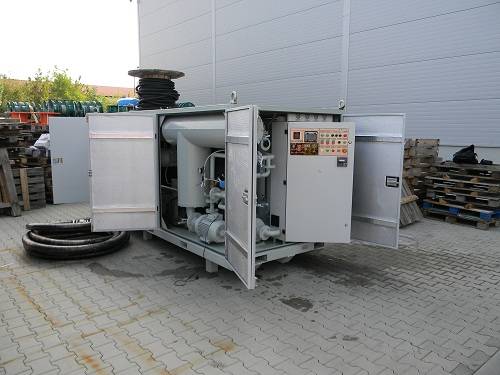
In September 2014, GlobeCore employees started up a new CMM-10A oil purification unit in Poland.  The CMM-10A is used to vacuum transformers and purify dielectric insulating oil.  

The CMM-10A unit is designed and intended for heating oil used in electric power transformers, degassing of transformer oil, and transformer vacuumizing.

The main users of this kind of equipment are facilities that are engaged in mounting, repairing and servicing oil-filled, high-voltage electrical equipment.

Recycling of Used Lubricating Oil

Almost every production process results in waste products that can be used as raw materials for some other form of new production.  The diminishing supply of oil resources will result in the recycling of industrial wastes in order to get new raw materials.

Such a term as ‘used lubricating oil’ (ULO) can be found in scientific publications, but  what does it mean?

ULO is oil which previously had been in some type of industrial service and, as a result, became contaminated by physical and/or chemical impurities.   The main difficulty is that when the oil was in service, some contaminants (water, dirt, metal particles, and chemicals) made the lubricating oil unfit for use.

Nowadays, ULO is one of the most common technogenic wastes that can cause serious environmental problems.  The statistics show that the spent oil makes up about 20% of the total amount pollution found in surface water.

The recycling of used lubricating oil is of great importance because other ways (dumping or incineration of wastes) may lead to even greater environmental problems that result in great financial expenditures.

It is worth noting that the recycling methods must be chosen in such a way that they do not constitute threats to the biosphere.  If you have read publications, dedicated to recycling of used lubricating oil, you may come across various terms such as recycling, purification, or regeneration.

The term ‘purification’ means a continuous or periodic processing of  lubricating oil using such units as sedimentation tanks, filters, centrifuges, or adsorbers.  An important point is that the final product of the purification process does not always match the quality of fresh oil.  The purification may be followed by decoloration of used oil, but sometimes the performance characteristics may be below the acceptable range.  Creation of some circular contours may be necessary to purify used oil without its discharge from the oil filled equipment.  This procedure may be applied to engine, turbine, industrial as well as all kinds of transformer oils.

The term ‘regeneration’ usually means the procedures, aimed at reclamation of used oil’s performance characteristics to those of the initial product.

Regeneration is a set of more complex physical and chemical processes such as coagulation, adsorption, or sulfuric acid refining.

The de-sludging, filtration, centrifugation and vacuum processing are the major methods of the used oil reclamation process.  More complex physical and chemical methods are applied if the oil is very contaminated or very old.  The on-site regeneration of used lubricating oil can be very cost effective.

GlоbeCоre has developed and is still producing a variety of mobile oil stations in the  CMM , CFU and CMM equipment lines.  GlobeCore’s modern and efficient oil procesing equipment allows the equipment owners to extend the service life of oils and thereby greatly reducing the costs of new replacement oil.

GlоbeCоre produces equipment of German quality, which is recognized in more than 70 countries of the world.

A proper choice of oil purification equipment allows equipment owners and operators to solve a wide range of tasks that greatly benefit their production processes.

Many countries have practiced a method of separate collection of used oil that allows the companies to get a high-quality product, as well as a minimum amount of waste products from the regeneration and recycling processes.

It is therefore, the problem of collection and regeneration of used lubricating oil is of vital importance nowadays.  If performed properly, the cost for regenerated oil may be reduced by 40-70% as compared with the new oil.

A New Model of the CFU Unit Line Has Been Designed

In December 2014, GlobeCore succeeded in designing a new model for their CFU unit line of equipment.

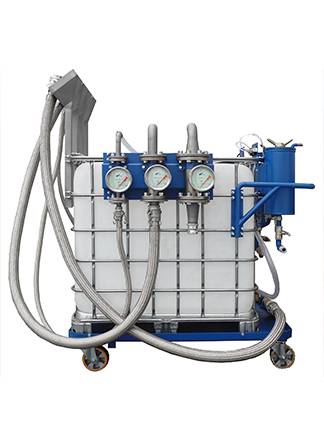
Oil filtration units are best suited for the installation, repair and operating of oil filled equipment.  They are designed to remove mechanical impurities from lube oil and industrial oils.

This equipment allows for such operations as:

(1) oil service life extension;

(2) trouble free servicing; and

(3) on-site oil processing.

Unlike the existing CFU units, the new model is fitted with an additional intermediate container.  With the help of this container, used oil may be collected from tanks situated in different parts of the workshop.  To meet the customer’s needs, the processing power of the new CFU units has been increased from 160 litres per hour to four square meters (4m3) per hour.  Special filters that remove moisture may be mounted into this new model of the CFU units.

How Does Transformer Oil Influence the Maintainability of High Voltage Transformer oil

High Voltage Transformer oil

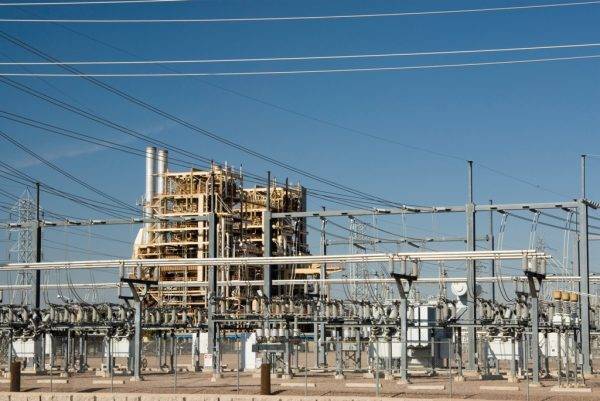
The high-voltage power transformer is considered to be one of the most essential and expensive elements of electrical energy distribution systems.  It is no wonder that the operational reliability of the whole power grid depends on the transformer’s operation.

Not one industrialized country in the world can avoid the technological obsolescence of electric power equipment.  Here are some examples.

According to the researche of the US Electric Power Research Institute,  65% of all transformers in the USA have served more than 25 years as of 1997.

In Japan about 30% of the power equipment have been in use more than 30 years.

The same thing is in Russia, where 45% of the transformers have operated for more than 20 years and 35% – more than 25 years.

In Ukraine, 40% of the transformers have exceeded their expected operational service life.

Therefore, the reliability of the energy systems in future will be determined by the service life of their transformers.

If to maintain transformers properly and remedy the developing defects quickly, the service life of the  high-voltage power transformer may be extended up to 30 or even 40 years.

The obsolescence and/or failure of the high voltage transformer oil is a very pressing problem that requires an optimal solution.  In most cases, the electricity distribution equipment breaks down as the result of long term operation without the proper preventive maintenance.

The main reasons for equipment breakdown is as follows: 22% – the material aging, 19.4% – construction defects, 16.8% – improper operation, 10.3 % – irrelevant influence, 5.8 % – off-design modes in the electrical grids, 4.2% – repair defects , 3.5% – climatic and external impacts.

High Voltage Transformer oil

High Voltage Transformer oil

The deterioration of transformer oil properties makes up about 20% of all power system disturbances: 9.2% –  gas, released into oil, 7.47%  – oil aging, 2.18% – oil contamination and 0.62 % – oil oxidation.

These figures concern only the cases that arise from the oil aging.

Sometimes a negative impact of the aging products on the solid isolation is not taken into account.

Nowadays, the oil oxidation products (hydroperoxide and water soluble acids) are proved to reduce the cellulose polymerization degree, and that affects the durability of paper insulation.  Additionally, the electrical strength and the service life of the insulation largely depend on the moisture content.  If there is a high content of moisture in the insulation, the paper fibers are separated and then get into the oil,  reducing its electrical strength.  The dielectric strength is reduced by 20-50% if there are gas bubbles in the oil.  As a result, there are partial discharges that reduce the dielectric strength of the whole liquid and solid insulation system.

Taking everything into consideration, there is no doubt that normal operation of high voltage transformer oil is determined by the liquid insolation – transformer oil.

GlobeCore has developed and is still producing equipment that provides for the preservation of performance characteristics of transformer oil.

GlоbeCоre equipment allows for the purification, drying and degasification of not only transformer oils, but also industrial, turbine, and hydrualic oils.

It is therefore,  GlоbeCоre equipment  thta enjoys widespread popularity in more than 70 countries of the world.

Particular attention should be paid to GlоbeCоrе equipment designed for transformer oil reclamation.

In the course of the oil reclamation process, the properties of the dielectric oil are restored to the original specified values and the aging process is tolled.

It allows the enterprises to extend the service life of oil as well as high voltage transformer oil. Thus, the enterprises can avoid considerable financial expenditures as they will not have to buy large quantities of new oil.

Breaking news! Our engineers have just developed and constructed a new degassing plant, the CMM-6D, which has been successfully tested and put into production!

Breaking news!
Our engineers have just developed and constructed a new degassing plant, the CMM-6D, which has been successfully tested and put into production.

SAM_4949 Копия SAM_4954

DEGASSING UNIT CMM-6D

Degassing unit CMM-6D has been designed to clean electrical and turbine oils by removing mechanical impurities as well as water and gases using a thermal vacuum purification process.

The main features of this degassing unit are:

1. Automatic Touch Pad Controls

Копия SAM_4952

2. Using only one oil pump
3. Operation is controlled automatically
4. Energy saving equipment: oil is heated according to pre-set performance standards
5. Vacuuming of many other types of equipment

The purifier operates in the following modes:
– «out vacuum mode»
– «heating filtration mode»
– «vacuum mode»
– «degassing mode»
– «manual mode»

Parameters:
1 Capacity, м3/hour
– degassing, drying and filtration mode 2-6
– heating and filtration mode 2-6
2* Properties of purified oil:
– volumetric gas content % 0.5
– volumetric water content, ppm,
– filtration fineness, microns 1
3.Size and mass, mm
– length 3700
– width 1750
– height 2320
4. Mass, kg 2600

Oil reclamation equipment will extend life of your transformers and safe your money

Oil Reclamation and the GlobeCore Oil Reclamation Process

GlobeCore is an Oil Reclamation and Oil Purification equipment manufacturer and produces equipment that perform the industry leading oil reclamation process.
Oil that is intended for use in electric power transformers is purified, degassed, and dehydrated. Cleaning mainly removes mechanical impurities, sludge, and water and moisture from the oil.  The GlobeCore Process also removes these contaminates and water from the core, windings and insulating paper completely stopping the paper degradation process.
The GlobeCore line of equipment for oil filtration, oil purification and oil degassing as well for reclamation of transformer oils are the most “in demand” models for the “recovery” and restoring of oil and fluids that have partially or completely lost their performance characteristics in the industry today.
Having a proper oil filtration and oil reclamation system as part of your transformer maintenance equipment will extend the life of your transformers and the overall efficiency of your operation, saving you time and money.

Oil fiiltration: CMM series

Capacity is from 1 v3/h to 10 m3/h.

This mobile oil processing unit is designed for degassing, removal of solids, thermal vacuum drying and heating of oil for power transformers with voltage up to 1150 kV. Capacity is from 1 v3/h to 10 m3/h. This unit can process Oils with viscosity of no more than 70 cSt at 50С.
CMM-M mobile oil units are designed for the following processes:

  • Drying to less than 10 ppm moisture content;
  • Degassing to less than 0.1% volumetric gas content;
  • Increase of oil breakdown voltage to 70 kV;
  • Drying of electrical equipment while purifying the oil;
  • Initial filling of electrical equipment with insulating oil;
  • Nitrogenation of transformer oil;
  • Pulling vacuum on transformers and other electrical equipment.

Oil Purification:  CMM Series (Oil Reclamation Process from Mechanical Particles Only)

Capacity form -16 v3/h to 6 m3/h.

The CMM oil units are designed for removal of solids and moisture from electric insulation oil with viscosity of no more than 70 cSt at 50С.  The units are used for installation, repairs and operation of oil filled, high voltage equipment (power transformers, high voltage switches etc).  The units may be used for heating of oil containing electric systems with hot oil, vacuum drying of transformers and vacuumizing.  The units can be used by installation, repair and operating facilities related to transformer servicing and maintenance.  The units are assembled on a frame, supporting the units’ components: input and output oil pumps, electric control cabinet, vacuum chamber, coarse and fine cartridge filters, vacuum pump and pipelines with valves.

Oil Reclamation Process Units: CMM-R series (full oil regeneration)

(Using Fuller’s Earth sorbent materials)

The CMM-R (Portable units for oil reclamation process) units are designed to extend life time of transformers by restoration of dielectric strength and chemical composition of the dielectric insulating oil.  In the process of oil restoration, the unit removes the products of oil decomposition and acidic materials, improves oil color, increases its stability to oxidation and lowers gas solubility.
Capacity of the CMM-R units is defined by two parameters: (1) liters per hour rate (L.P.H.) and (2) the amount of oil in liters passed through the Fuller’s Earth.  The approximate volume of reclaimed oil is 4 liters per 1 kg of Fuller’s Earth at acid number 0.2mg KOH/g.  The amount of oil treated per 1 kg of Fuller’s earth increases proportionally to the decrease of the acid number.[:]